Practical guidance
The guide library
Learn one decision at a time: custody, network settings, gas, transfers, explorers and tokenized assets.
New here? Choose a learning path . Looking for a word? Open the glossary .
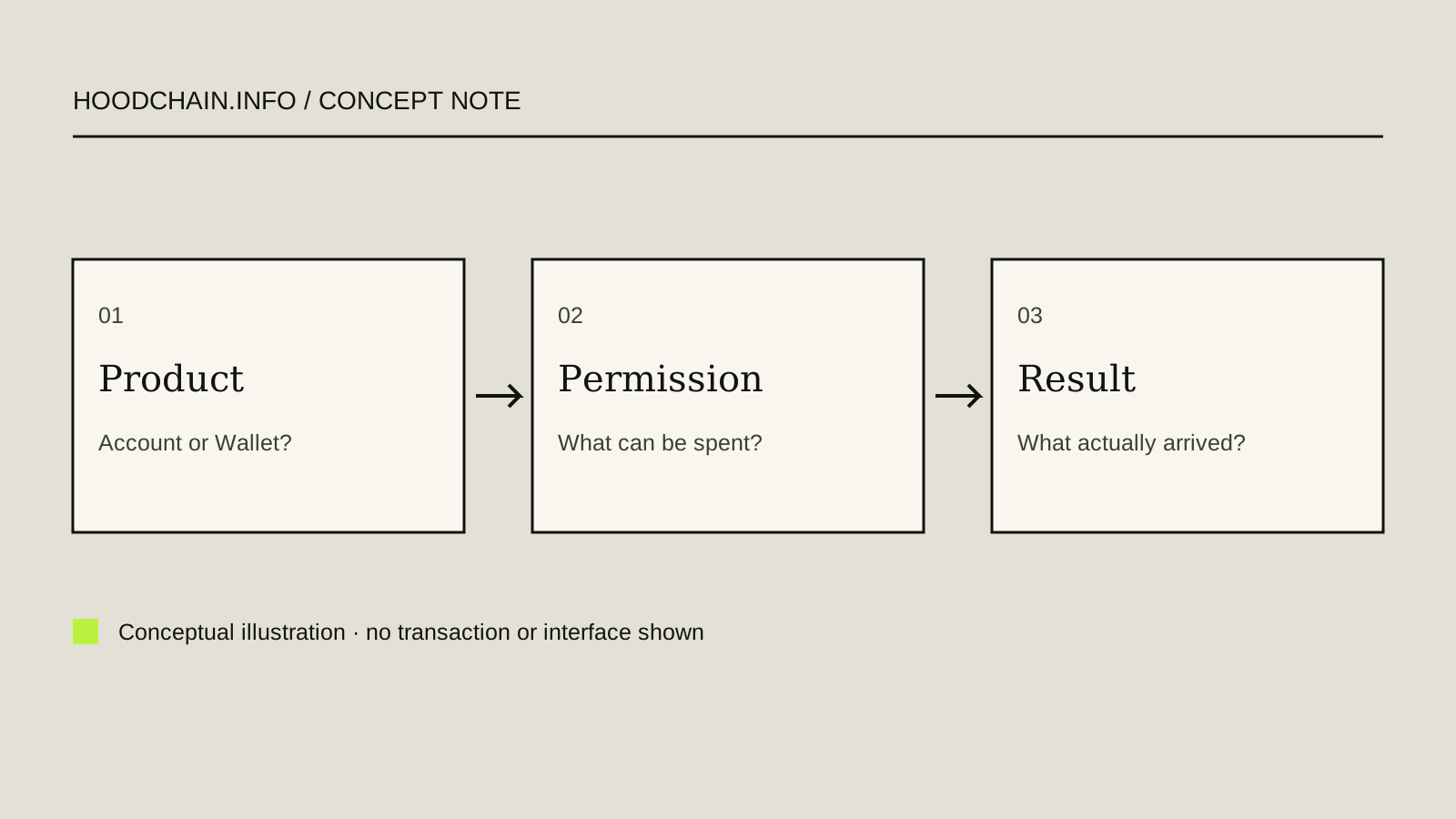
Wallet swap or account order? Read what you are authorizing
Compare brokerage, custodial crypto and self-custody swap evidence, then diagnose a fictional approval-only record.
Shares, cash flows and shareholder rights
Understand what a share may represent, how dividends and price changes differ, and why rights depend on the share class and instrument.
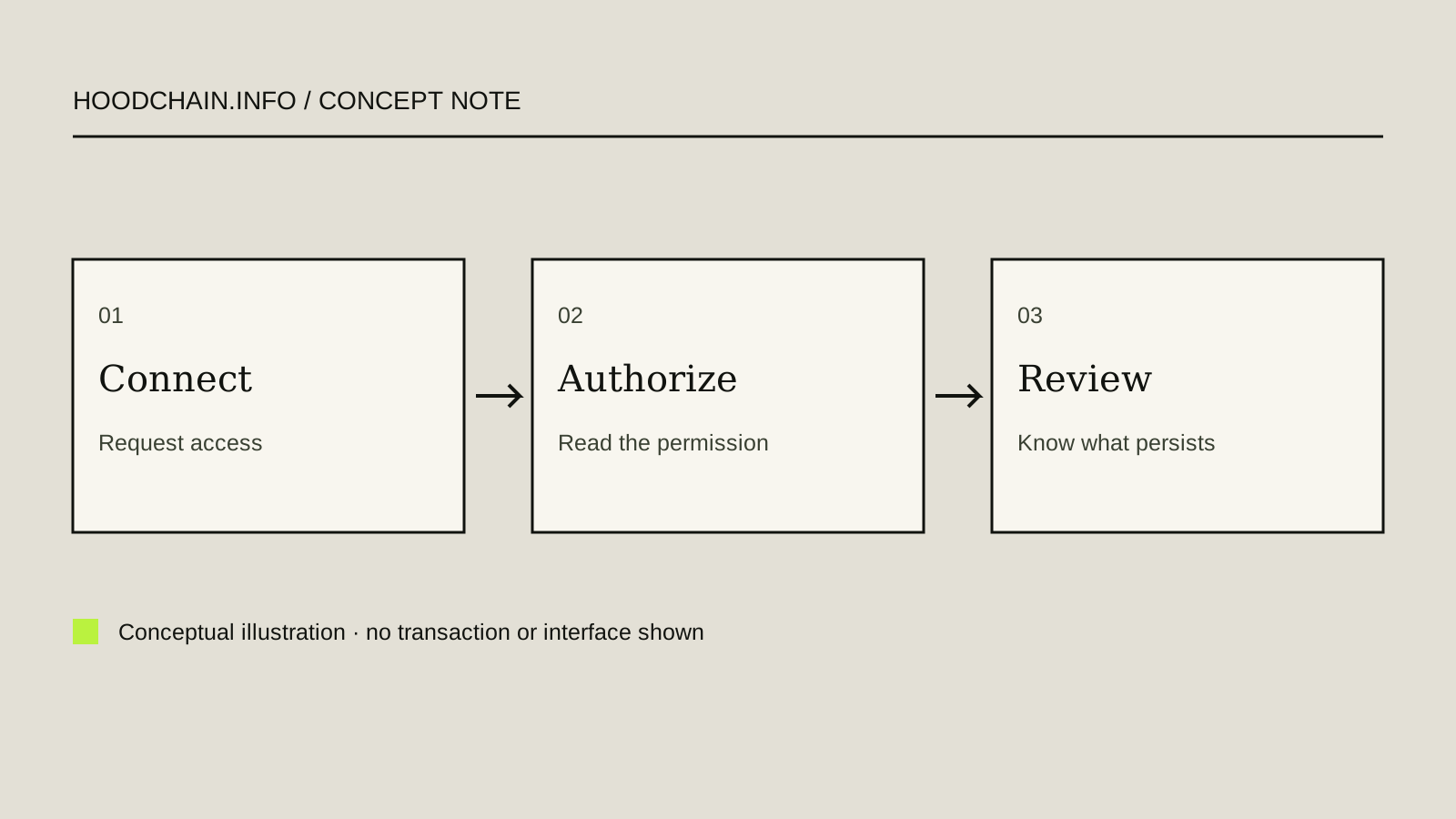
Token approvals & wallet signatures: read the permission
Separate connecting, signing, approving and transferring, then compare the authority requested with the task you intended.
Valuation models and assumptions
See how a discounted cash flow model turns hypothetical future cash flows into a present-value estimate, with terminal value and sensitivity made explicit.
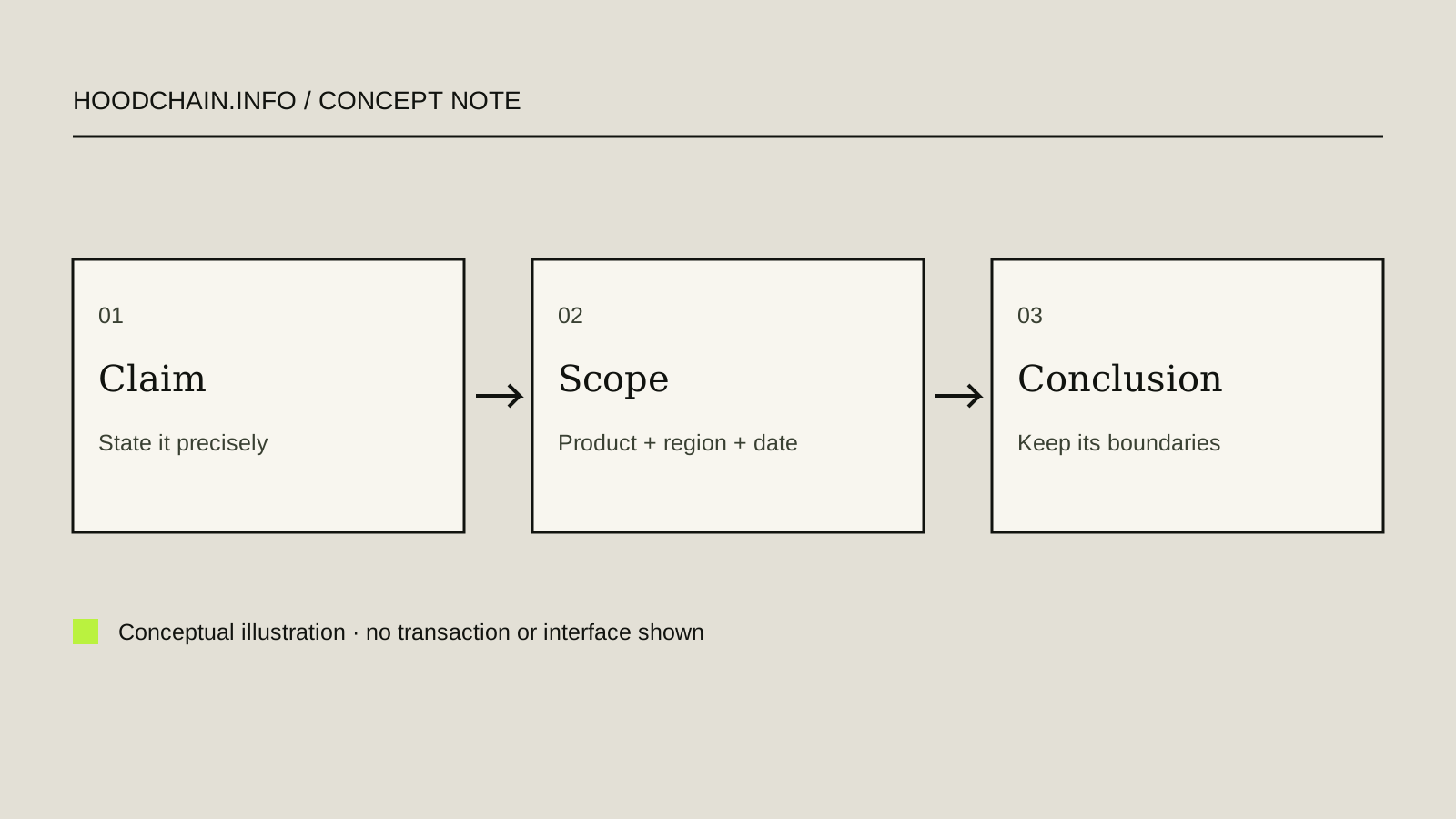
Verify a crypto claim before acting on it
Check the publisher, product, region, action and date, then state only the conclusion the evidence supports.
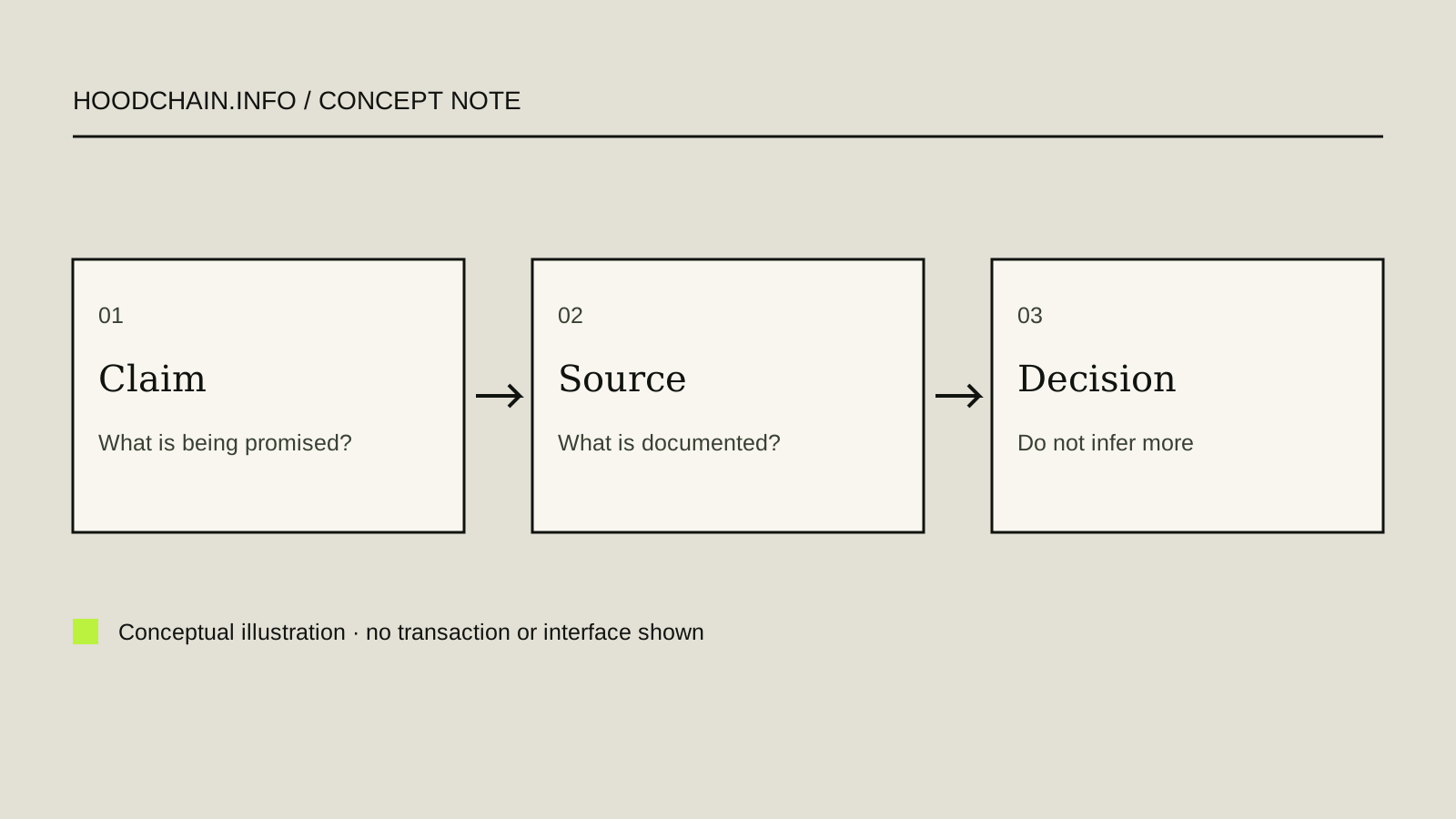
Do you need a HOOD token to use Robinhood Chain?
The documented gas asset is ETH. Learn to distinguish that fact from token rumors and predictions.
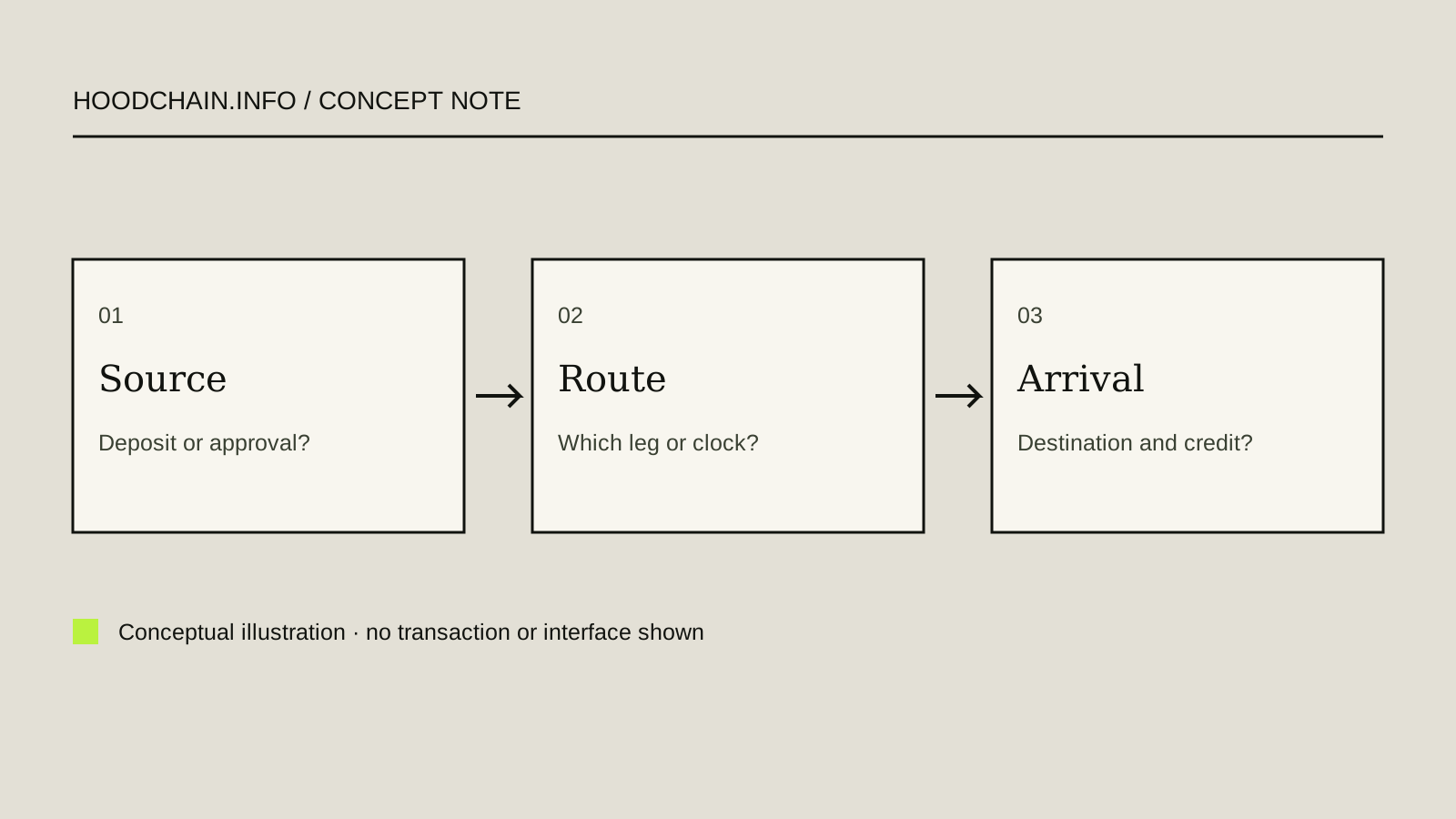
My bridge has not arrived: identify the pending stage
Diagnose canonical deposits, withdrawal waits, missing claims and third-party routes using three fictional bridge records.
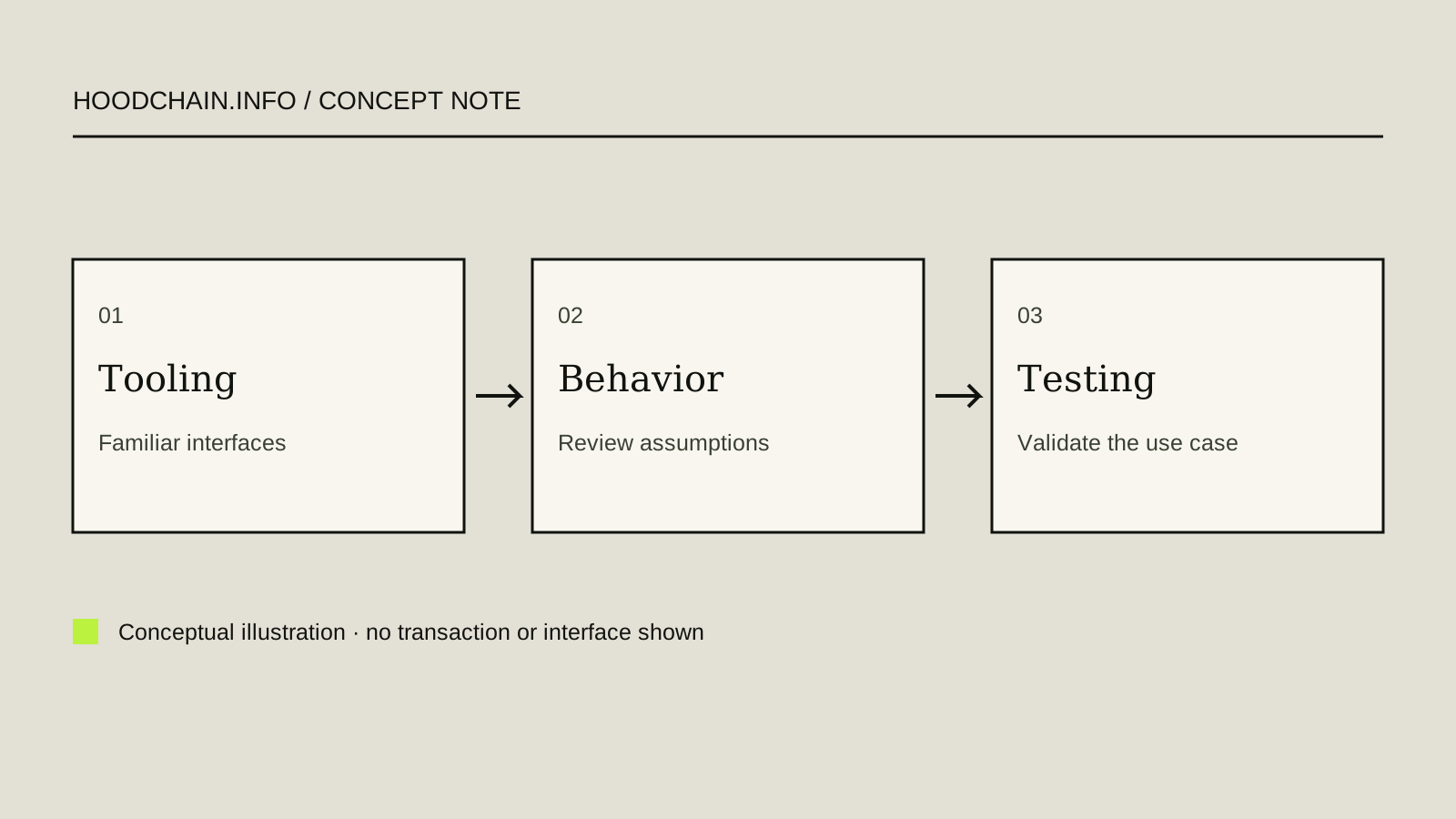
Robinhood Chain vs Ethereum: what compatibility leaves out
Understand the user-facing differences and the developer assumptions that require chain-specific review.
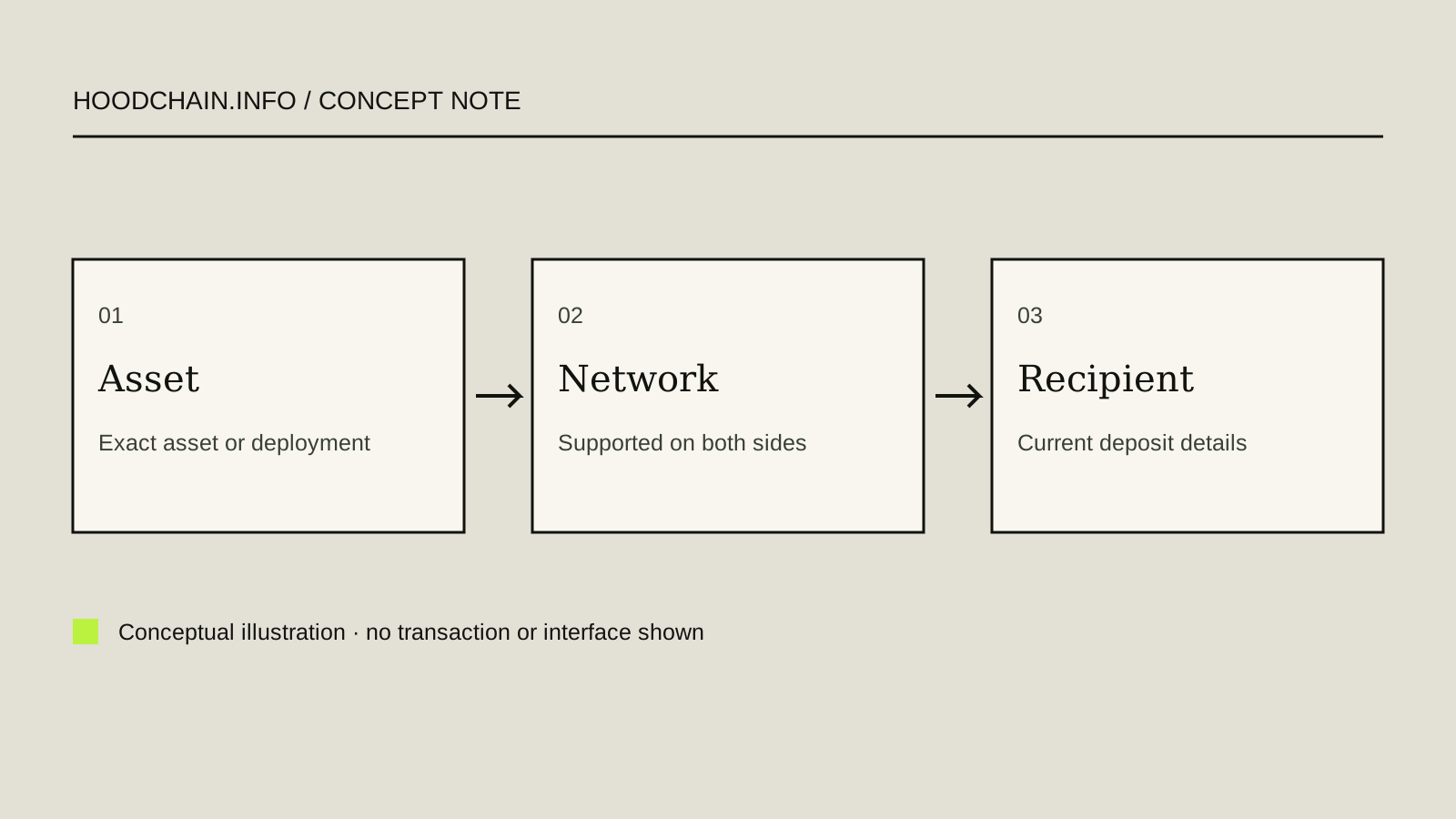
Before a Robinhood Crypto transfer: three checks
Match the asset, network and recipient; separate a withdrawal request, chain execution and receiving-service credit.