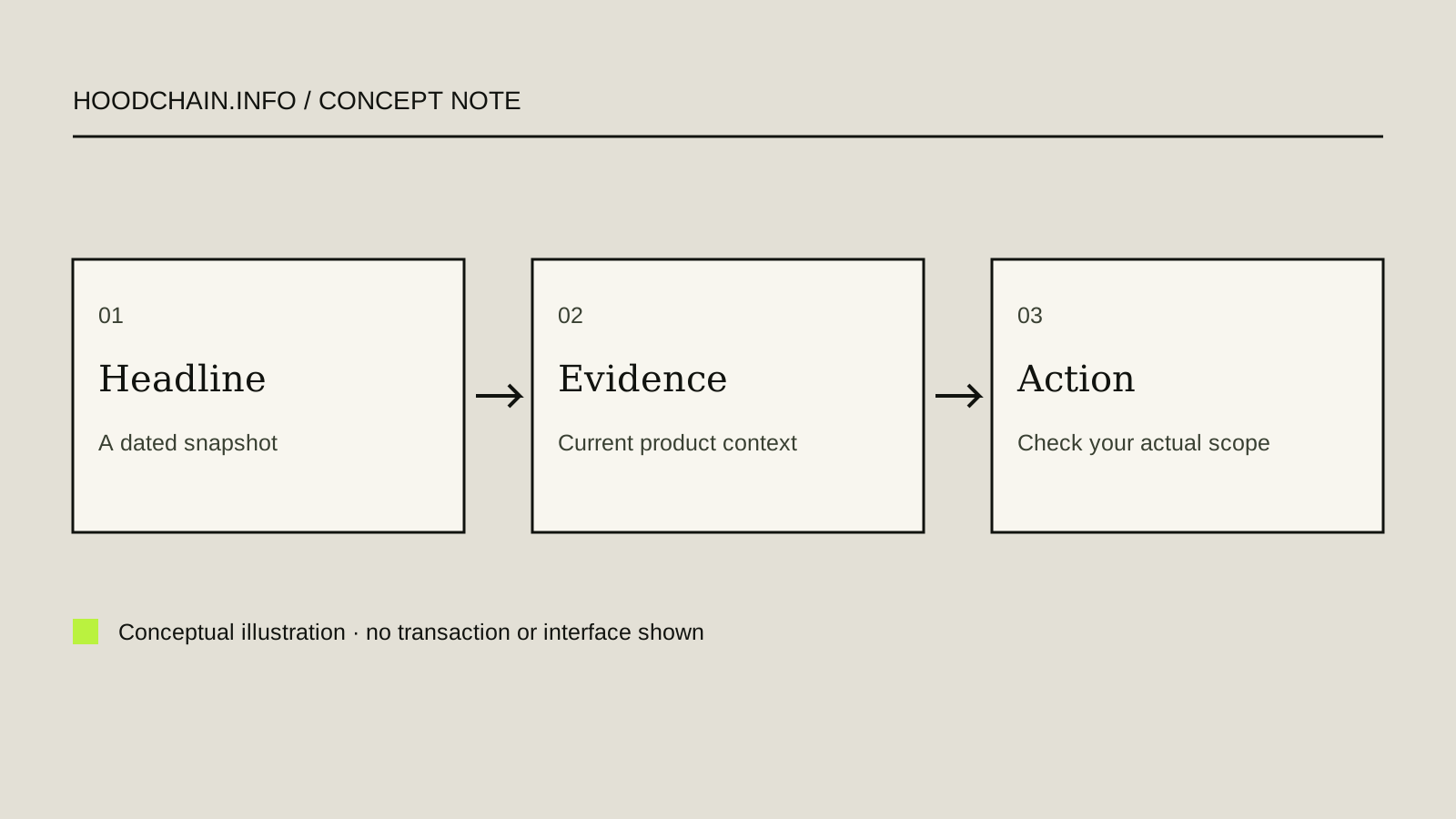
A catalog count is a dated snapshot
An announcement about the number of instruments available at launch answers a historical catalog question. It does not tell a reader which instrument is available now, whether their account is eligible or which network carries an authentic deployment.
This retained URL refers to an earlier “190-plus” headline. The current lesson does not repeat that count as a live inventory. No complete current catalog was independently counted for this rebuild.
Check availability in separate layers
- Instrument: what are its issuer, rights and terms?
- Account: is the product available for your market and account?
- Deployment: which contract exists on the intended chain?
- Action: can you acquire, transfer, trade or redeem it through the route you intend?
These questions can have different answers. A running contract does not establish a particular account’s access, and an asset listed in a product does not guarantee liquidity in another venue.
What the current documentation is useful for
The Stock Token overview explains the instrument’s structure and key constraints. The contract reference identifies deployments. The API documentation explains metadata and data semantics. None of those sources is a substitute for a reader’s applicable regional product terms.
When an old headline reaches you, use it as a prompt to reopen the primary sources. Compare the date, product, market and action instead of using the old total as a proxy for current usefulness.
A useful update changes a decision
For beginners, a material update explains what changed, who it affects and what remains uncertain. A rising catalog count alone does not establish better suitability, lower risk or a recommendation to participate.
This note is documentation context, not a report of a new launch, an executed trade or a verified change to your account.